



- Collection
- Collection database
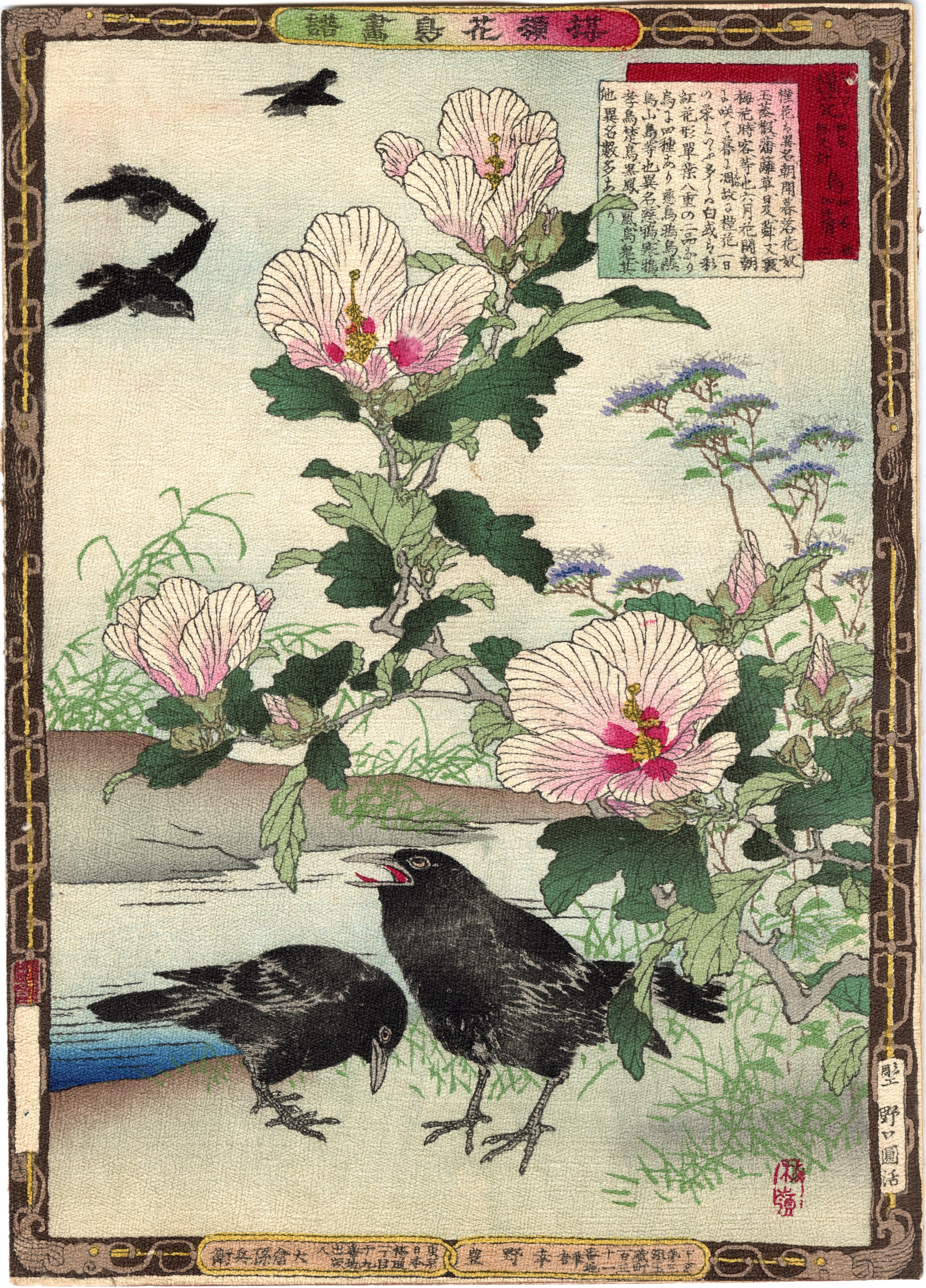
- Korean Rose and Crows: Autumn no. 2


Korean Rose and Crows: Autumn no. 2
Information
| Title | Korean Rose and Crows: Autumn no. 2 Mukuge karasu aki ni 雁来紅雁 秋二 |
| Date | 27/12/1883 |
| Publisher | Ōkura Magobei 大倉孫兵衛 |
| Woodcarver | Noguchi Enkatsu 野口圓活 |
| City | Kyoto & Tokyo |
| Artist seal | Bairei 楳嶺 |
| Blockcutter’s (and/or) printer’s) seal(s) | horikō Noguchi Enkatsu 彫工野口圓活 |
| Inscription | (lower margin) 下京第三組玉藏町百三十一番地 筆者 幸野豊 Shimogyō dai-3-gumi Tamakurachō 131 banchi hissha Kōno Toyo (Bairei’s address in Kyoto, author: Kōno Toyo) 東京日本橋通一丁目十九番地 出版人 大倉孫兵衛 Tōkyō Nihonbashidōri 1-chōme 19 banchi shuppanjin Ōkura Magobei (publisher’s address in Tokyo, publisher: Ōkura Magobei) Numbered 1071 一◯七一 |
| Width | 15,1 cm |
| Height | 21,1 cm |
| Object number | SH2023-CB-09 |
| iterature references | Complete set: https://pulverer.si.edu/node/816/title |
| Credit Line | Collection Japan Museum SieboldHuis, gift of Chris Blom, 2023 |
Description
From a series of 50 prints that depict and describe flowers and birds in encyclopedic style, divided in the four seasons. The prints were also bound and sold in two sets; one for autumn and winter and one for spring and summer. The series was later reissued without the decorative frame and descriptive texts.
This particular set was treated with the technique for making crêpe paper. The process of creating crêpe prints (chirimen) goes as follows: after printing, the sheet is moistened and, together with other sheets, wrapped around a cilinder, after which the roll is compressed. This is repeated from various angles, causing the print to reduce in size and obtains a wrinkly texture. Chirimen were especially popular among the French public in the late 19th century and were exported in great numbers around that time.